

Steamboat Springs offers stargazers some excellent opportunities thanks to clear skies and relatively minor light pollution. Whether you’re a seasoned pro at admiring the night sky or you want to start learning a handful of constellations — check out these local spots on the next clear night!
What Are Good Stargazing Conditions?
Check the weather forecast before you plan a stargazing outing, as this can make or break your views. For the most optimal conditions, you’ll want clear skies! This is key, as clouds, fog, or haze can obstruct your view of the stars either partially or completely at times. The fewer clouds in the sky, the better for your stargazing experience!
Naturally, the darker it is — the better. Light pollution can ruin the stargazing experience, as artificial lights have the pesky habit of washing out the stars. This is why stargazers and astrophotographers make it a point to choose a location far removed from city lights. There are even spots that are designated as dark sky areas! The darker the location, the better chance you’ll have of seeing more stars.
Nights with low humidity are preferable to muggier nights, which can reduce the clarity and visibility of the night sky. Dry conditions are preferable, which Steamboat can provide in abundance.
Plan your next stargazing outing on a night with little to no moonlight, as this can provide you with the best view of the stars and even the Milky Way! Check the moon phase calendar and plan a night where there’s going to be no moon visible or a thin crescent moon. A full moon can make it even more difficult to see the faintest stars or certain celestial objects.
While not the most important factor, cooler temps can lead to more stable air conditions. Atmospheric turbulence can cause stars to twinkle visibly, which makes it increasingly difficult to focus on them. Calm, stable air is ideal for the clearest possible view — especially when using a telescope for stargazing observations.
Additional factors that can be attributed to ideal stargazing conditions include low winds and little air pollution. Strong winds not only make for an unpleasant experience for the stargazer themselves, it can cause any images you take to shake.
Do You Need a Telescope to Go Stargazing?
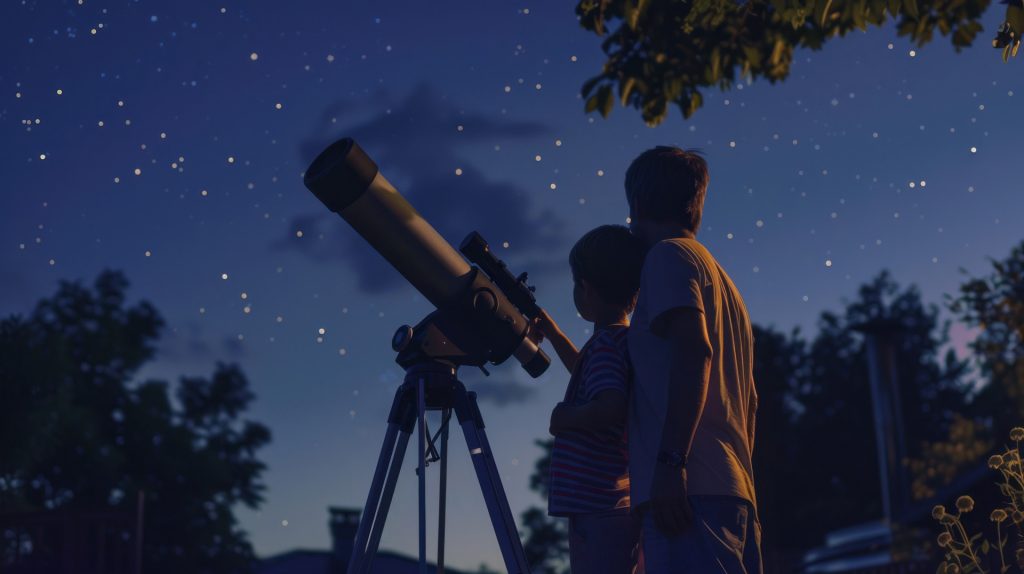
The good news is that you don’t need any additional tools to enjoy a stargazing night — especially if the conditions are just right. Though telescopes can enhance the overall experience, using just your eyes or even a pair of binoculars can make for a wonderful evening spent outdoors looking at the sky. During clear weather and in an area away from light pollution, stargazers can spot constellations, the Milky Way, and meteor showers with just their naked eye.
If you already have a pair of binoculars, this can be a good middle ground between just using your eyeballs and investing in a telescope. The portability of binoculars also makes them a solid option for those wanting a closer look at the moon, the planets, and some of the brighter star clusters in the sky.
Newbie stargazers can take advantage of helpful apps or star charts, which can teach the gazer how to identify constellations, planets, and other objects in the sky. Such apps include Sky Guide, Night Sky, SkyView Lite, and Sky Tonight. Take your pick and point your camera up at the sky for a guided walkthrough of what you’re seeing!
Telescopes can be helpful for those wanting to spot galaxies, distant star clusters, and more faint objects in greater detail. Naturally, a high-powered telescope can provide much clearer views of captivating details like the Moon’s surface or Saturn’s rings. However, if you’re just starting out — use what you’ve got on hand and save the telescope for later down the line.
Where Are the Best Spots to Stargaze in Steamboat Springs?
Buffalo Pass — This is a popular spot for stargazing near Steamboat Springs. The pass is located at a higher elevation, which provides an unobstructed view of the dark night sky. The pass is also far enough away from town to avoid excess light pollution.
Rabbit Ears Pass — Similar to Buffalo Pass, this is a great spot to gaze up at the night sky. The pass is known for its stunning scenic overlooks, which make for a peaceful place to enjoy the beauty of the night sky.
Steamboat Lake State Park — Situated about 20 miles north of Steamboat Springs, this state park offers stargazers a particularly dark view of the night sky with very minimal light pollution. As a bonus, the lake adds a serene backdrop for your stargazing adventure.
Stagecoach State Park — This state park is located south of Steamboat Springs and benefits from little light pollution and expansive, wide-open spaces. This allows stargazers plenty of room to set up a telescope and enjoy uninterrupted hours of stargazing.
Strawberry Park Natural Hot Springs — This remote spa destination is not only a great spot to unwind, but it can also provide unique stargazing opportunities! Enjoy the healing waters of the hot springs while you gaze upwards and try to spot the Big Dipper.
The Ball Observatory – Colorado Mountain College in Steamboat Springs was generously gifted the Ball Observatory on campus by Steamboat resident Dr. Robert Ball and his wife, Ann. The 10-foot observatory dome houses a reflector with a refractor, both on a Paramount ME mount run by The Sky X Pro. Keep an eye out for Star Parties hosted by the Sky Club to learn more about the mysteries of the universe and to enjoy the Colorado night sky with fellow stargazers.
3 Tips for Your Next Stargazing Night!
The #1 key to successful stargazing is to get as far away from light pollution as possible. You’ll never be able to appreciate the night sky in all of its glory when the stars are being washed out by artificial lights. While Steamboat doesn’t have the same level of light pollution as a city like Denver, there is still enough to make it difficult to appreciate the constellations and galaxies. Luckily, there are multiple spots that you can escape to and enjoy clearer skies such as a state park or one of the nearby passes.
It can take anywhere from 20 to 30 minutes for your eyes to become fully adjusted to the dark. Once adjusted, you’ll be able to appreciate fainter stars and details in the sky. To allow your eyes to adjust, avoid using bright lights such as phone screens and flashlights for at least 20 minutes before you start stargazing. If you need a source of light, a red flashlight is the preferable option. Some phones may even have a red mode as well, which helps to preserve your night vision once your eyes are adjusted.
As with any new hobby, patience is key! While you may have a handful of constellations that you want to spot, it can take some time to learn where they’re located in the sky and how to pick them out. Smartphone apps now make this easier than ever! To get the full stargazing experience, make sure to lie back, relax, and take your time as you scan the sky. You may surprise yourself at how immersed you can become in the experience! Some of the easiest constellations for beginners to spot include Orion (recognizable by red and blue supergiant stars and the “belt” made up of three stars in a row) and Cassiopeia (recognizable due to the distinct “W” or “M” shape, depending on the time of year).
Looking for one more bonus tip? Make sure to bring the bug spray! Depending on where you decide to set up for the evening, you may find that those pesky little insects come out at night just like the stars do!
Enjoy Your Stargazing Experience in Steamboat!
As the sun sets, get ready to gaze up at the skies and try to pick out your favorite constellations! Steamboat Springs is a prime spot for stargazing, whether you’re spotting stars from a local park in town or from the solitude of a campground. Oftentimes, you won’t even need a telescope to spot stars on a clear night!